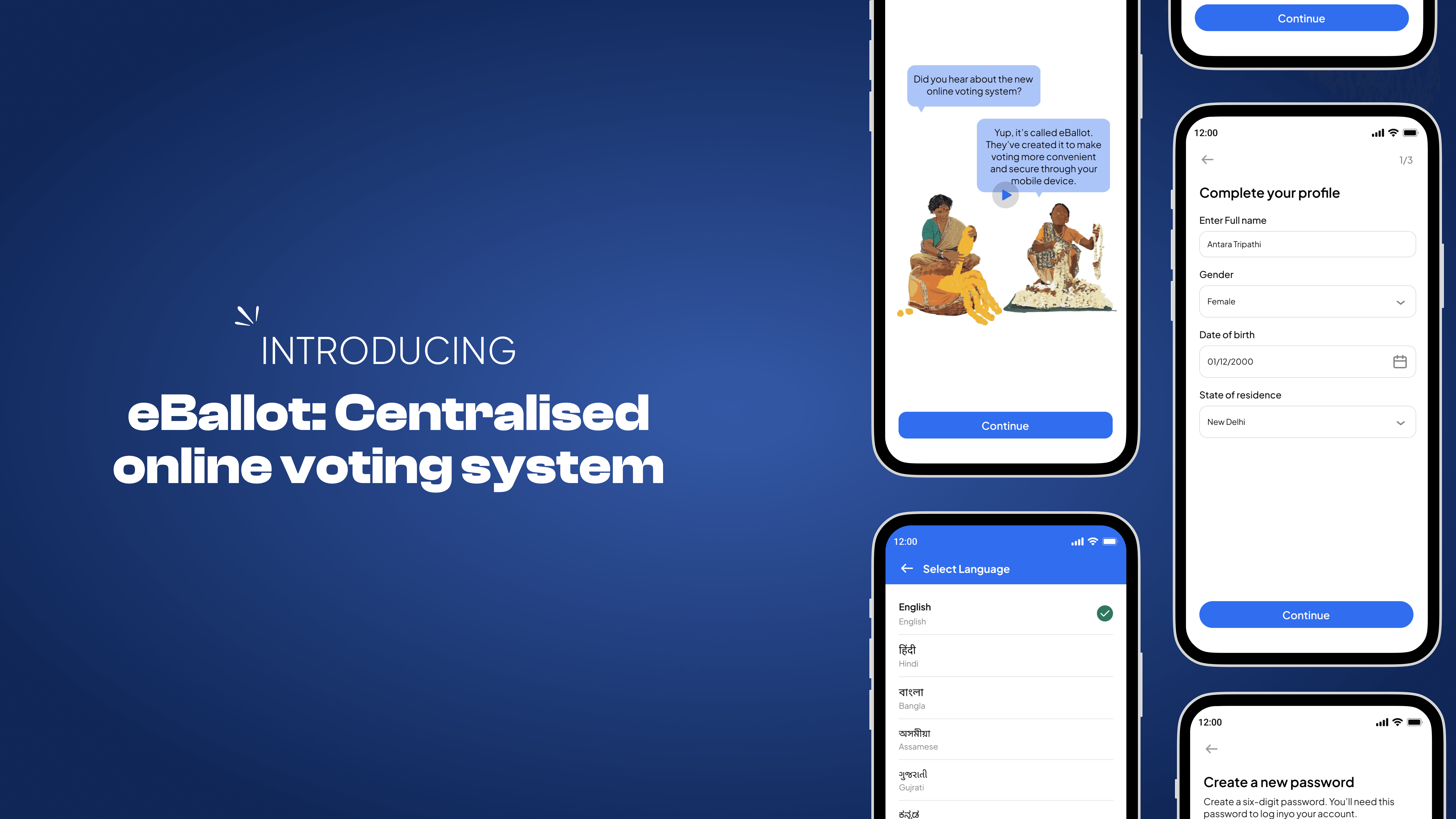
E-BALLOT

2023

eBallot: Centralised Online Votting System

eBallot: Centralised Online Votting System

eBallot: Centralised Online Votting System

OVERVIEW
OVERVIEW
OVERVIEW

Designing a Trust-First Online Voting Experience for India

Designing a Trust-First Online Voting Experience for India

This case study explores my design approach to creating a centralized online voting application that enables eligible citizens to onboard, verify their identity, and cast votes securely. The project focuses on balancing accessibility with trust, while addressing India’s unique challenges around scale, security, and voter integrity.
PROBLEM STATEMENT
PROBLEM STATEMENT
PROBLEM STATEMENT

Online voting has the potential to make civic participation more accessible and efficient at scale but designing for fraud prevention, voter identity, and ballot secrecy turns it into a high-stakes UX and systems challenge.

Online voting has the potential to make civic participation more accessible and efficient at scale but designing for fraud prevention, voter identity, and ballot secrecy turns it into a high-stakes UX and systems challenge.

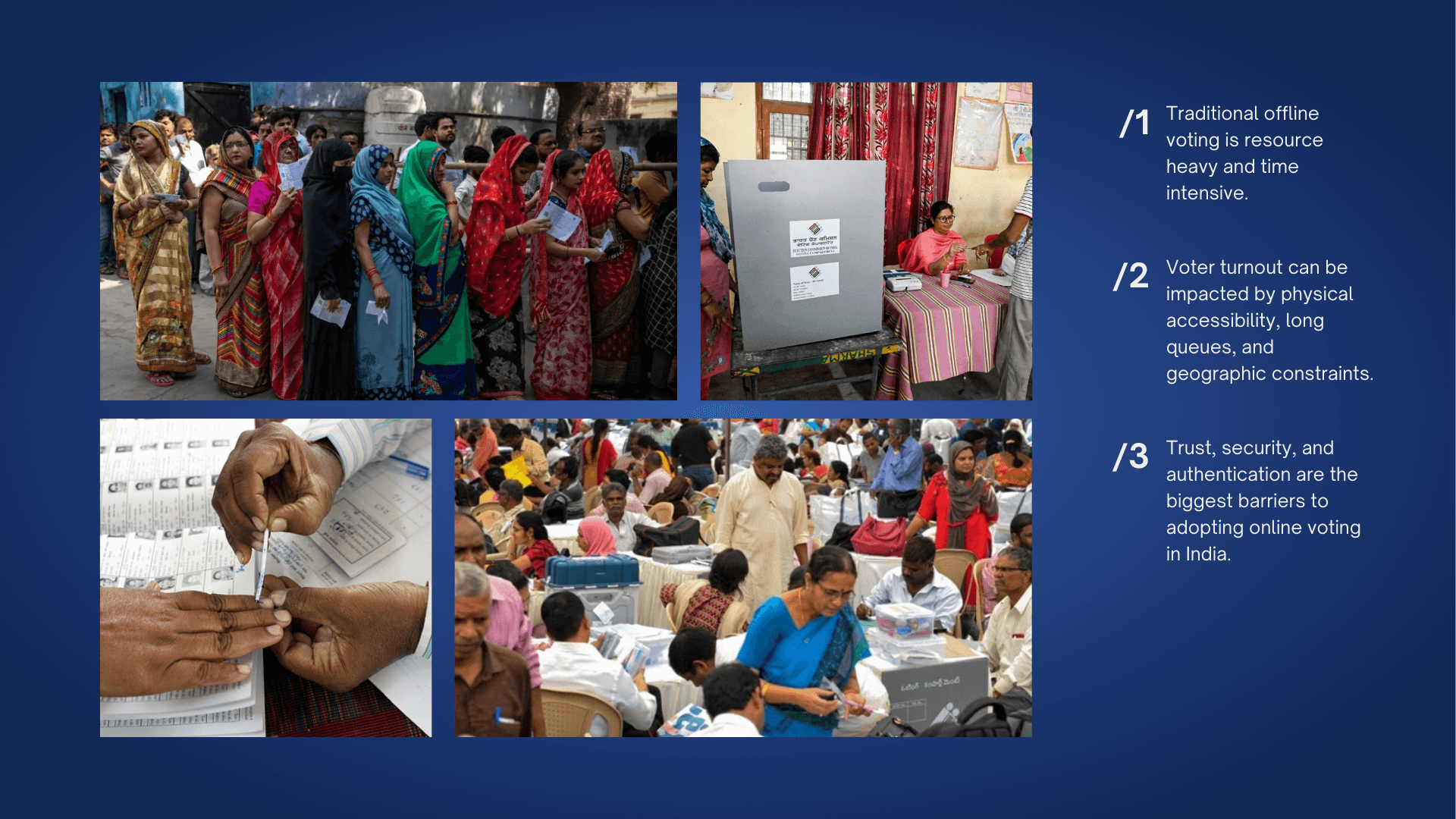
Initial Observations

Key Insight: These observations led to a deeper exploration of why the Government of India may consider transitioning to a centralized online voting system and the risks involved.

Research
Research
Research

Why is the Indian government considering a transition to online voting?

Why is the Indian government considering a transition to online voting?

1. Increased Accessibility & Convenience

1. Increased Accessibility & Convenience

Enables citizens to vote remotely using an internet connection, potentially increasing voter participation.

2. Cost Efficiency

2. Cost Efficiency

Reduces expenses related to physical polling booths, staffing, logistics, and manual vote counting.

3. Speed & Efficiency in Vote Counting

3. Speed & Efficiency in Vote Counting

Allows faster tallying and real‑time reporting, improving transparency and public confidence.

4. Enhanced Security & Integrity

4. Enhanced Security & Integrity

Digital verification systems can help ensure that only eligible voters participate.

Challenges
Challenges
Challenges

Challenges of Implementing Online Voting in India

Challenges of Implementing Online Voting in India

1. Security & Integrity Concerns

1. Security & Integrity Concerns

Risk of hacking, vote manipulation, and voter impersonation.

2. Authentication Challenges

2. Authentication Challenges

Accurately verifying voter identity at scale.

3. Reliability Concerns

3. Reliability Concerns

Technical failures such as poor connectivity or system downtime.

4. Ensuring Secrecy of Voting

4. Ensuring Secrecy of Voting

Maintaining ballot secrecy is a core democratic principle.
SOLUTION
SOLUTION
SOLUTION

Built around verification, transparency, and voter confidence without compromising usability or ballot secrecy.

Built around verification, transparency, and voter confidence without compromising usability or ballot secrecy.

USER JOURNEY
USER JOURNEY
USER JOURNEY
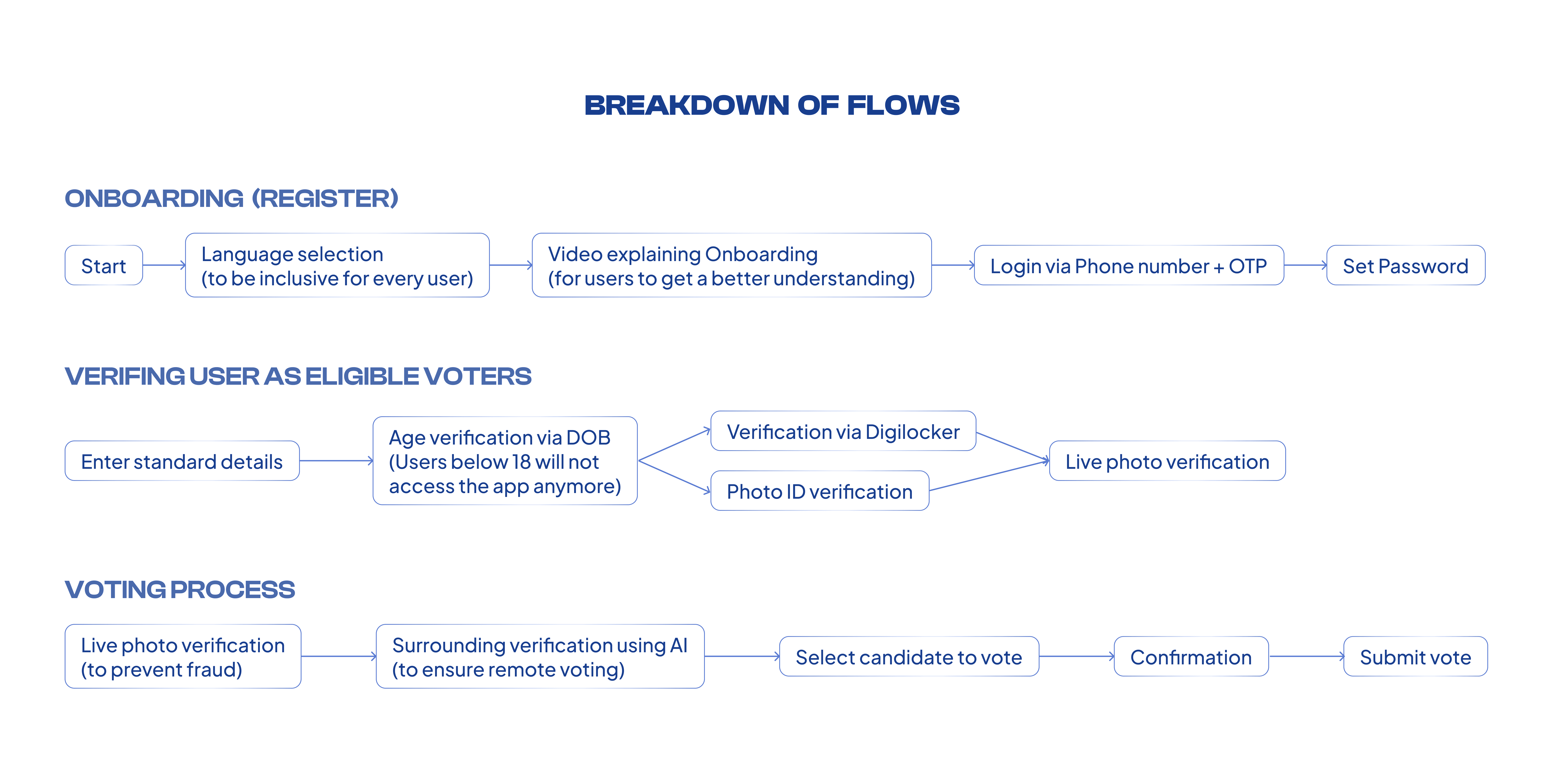
CORE FLOWS
CORE FLOWS
CORE FLOWS

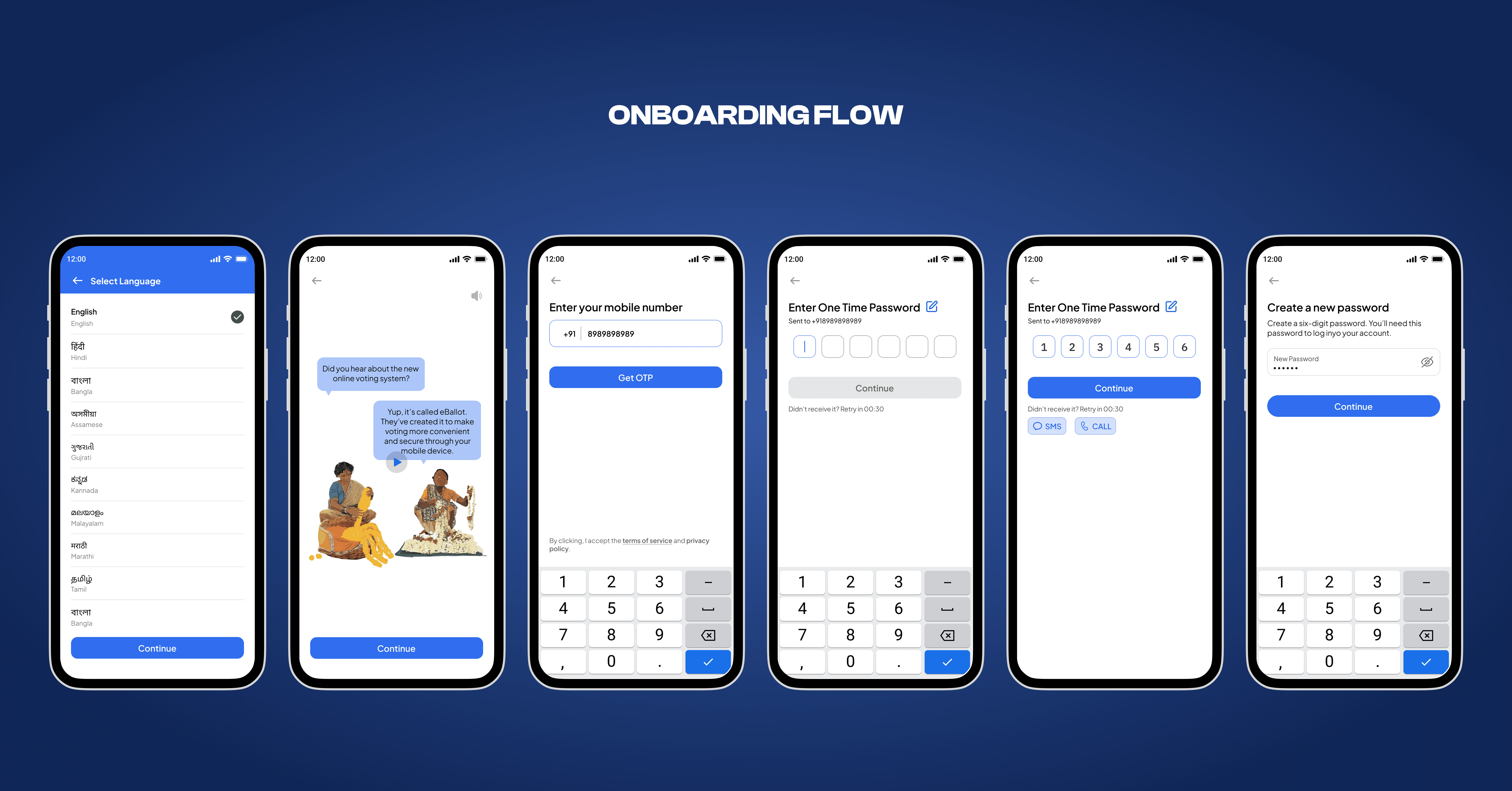
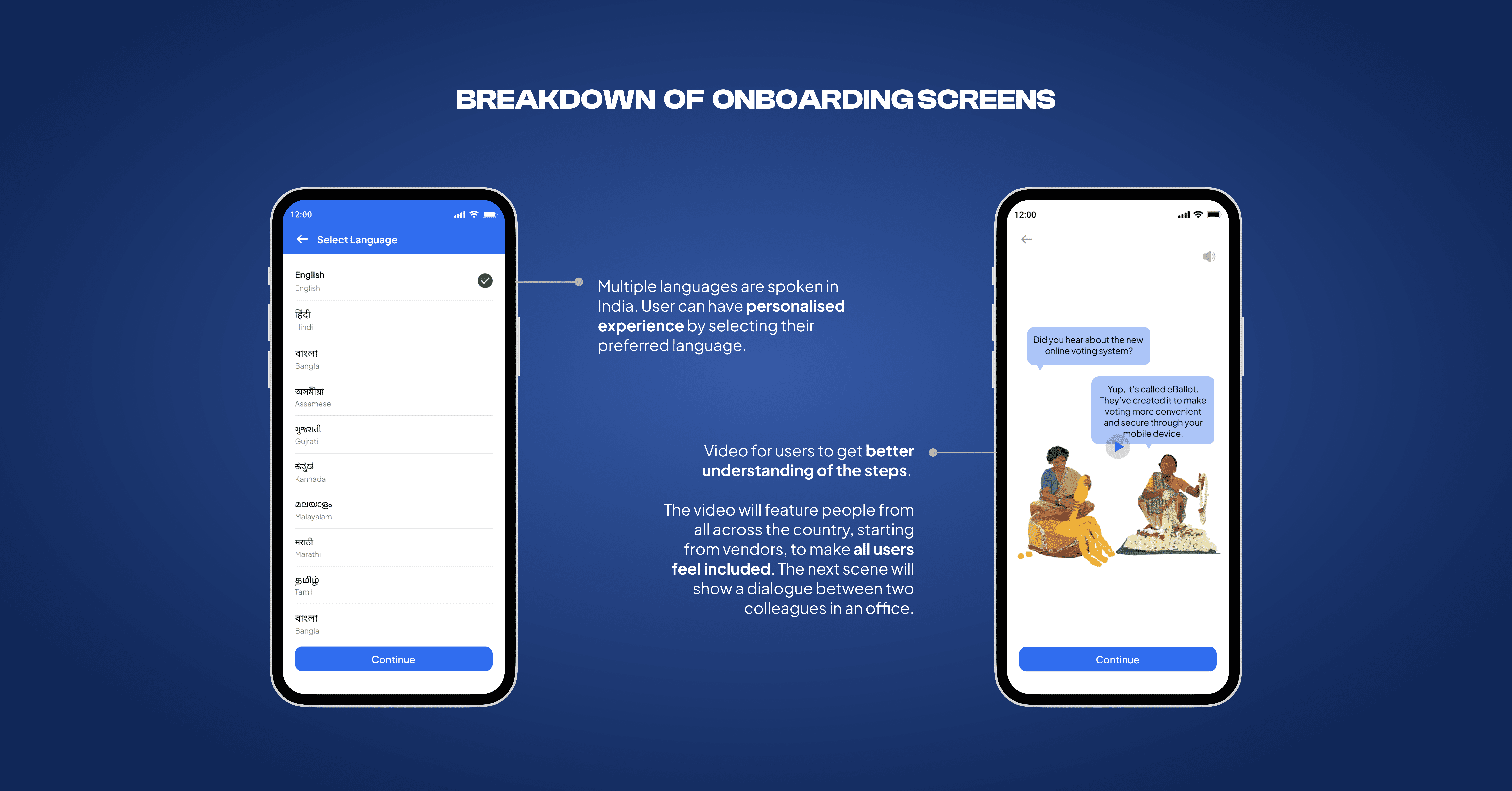
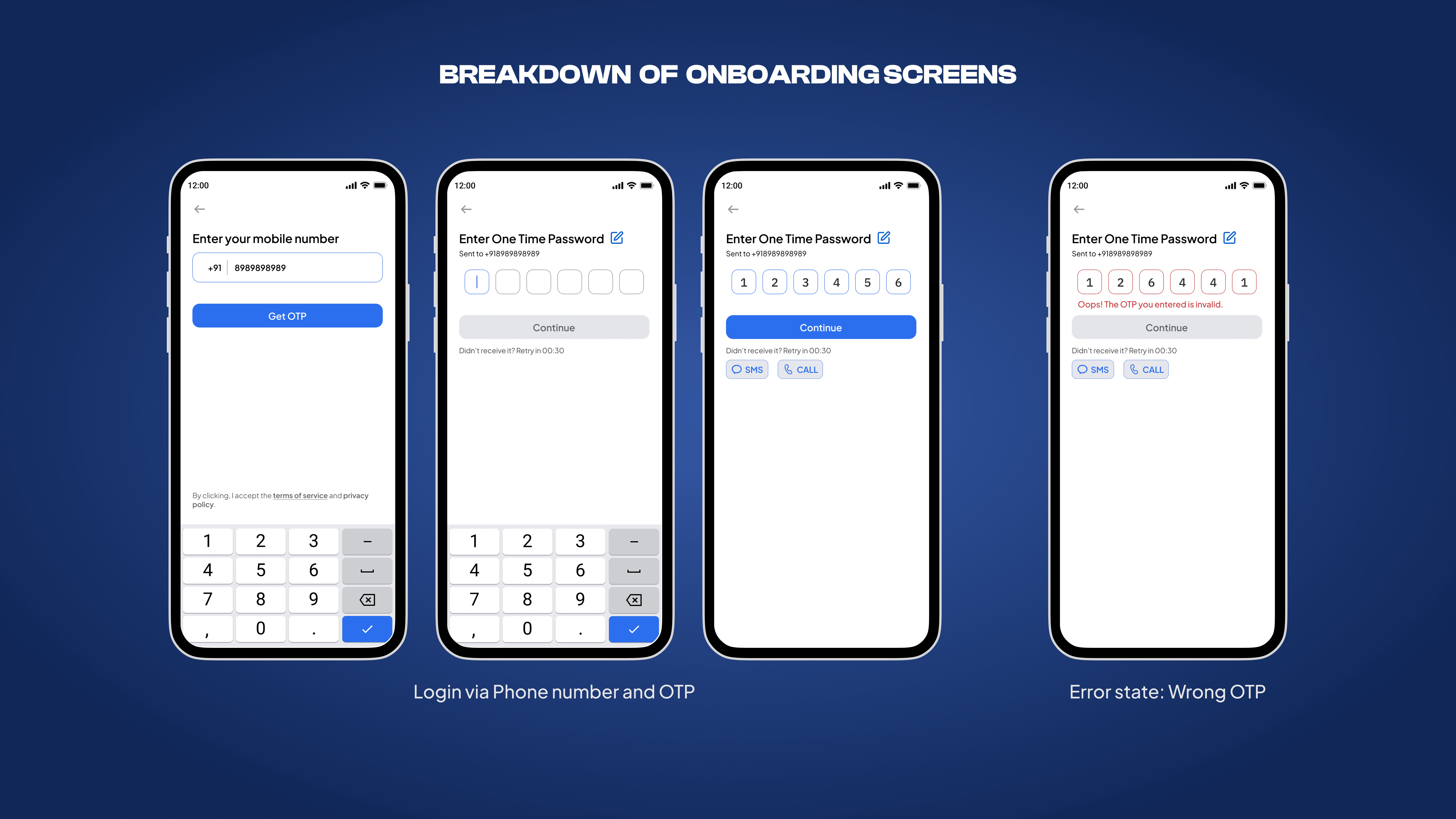
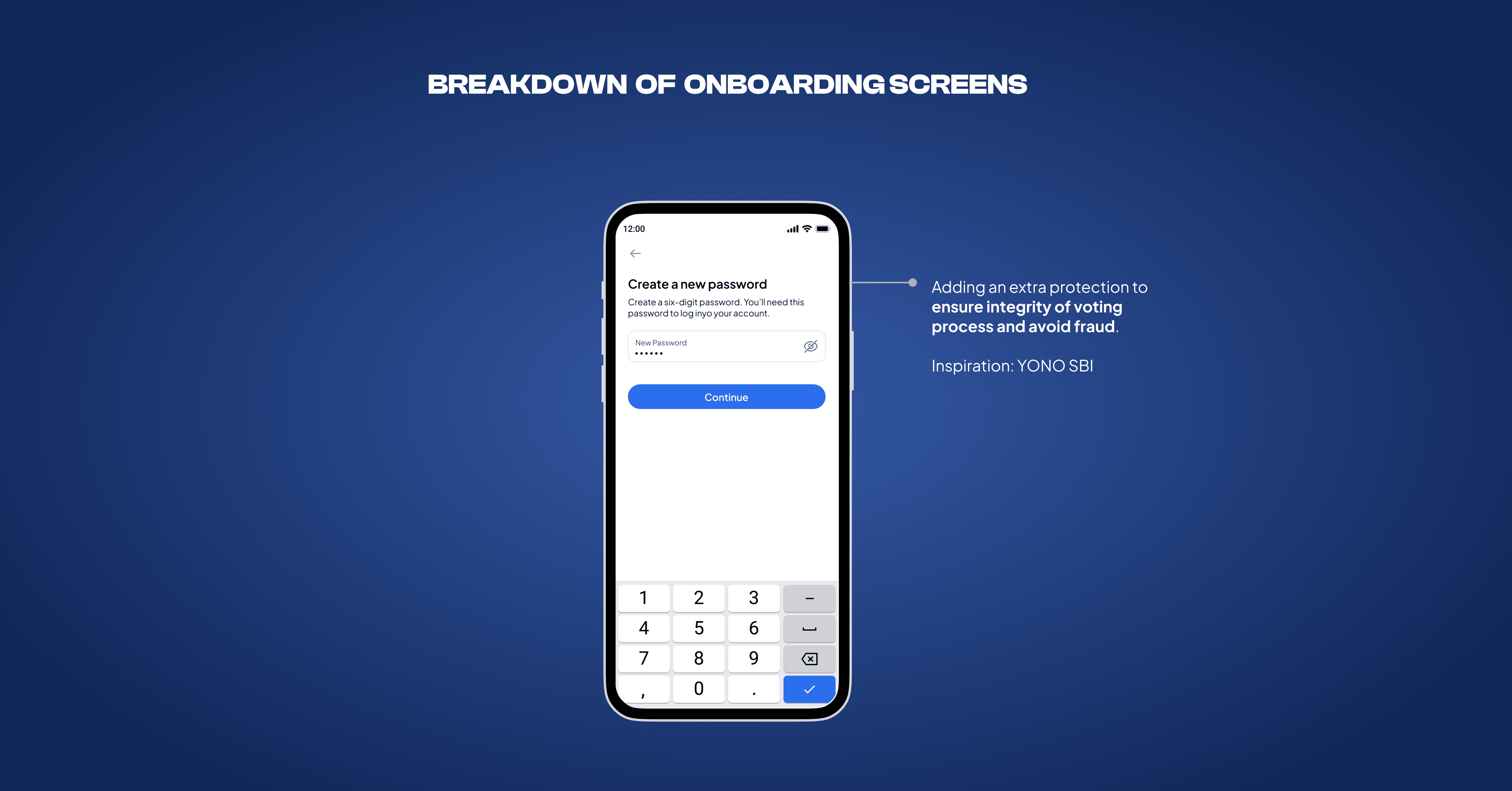
Onboarding Flow

Onboarding Flow

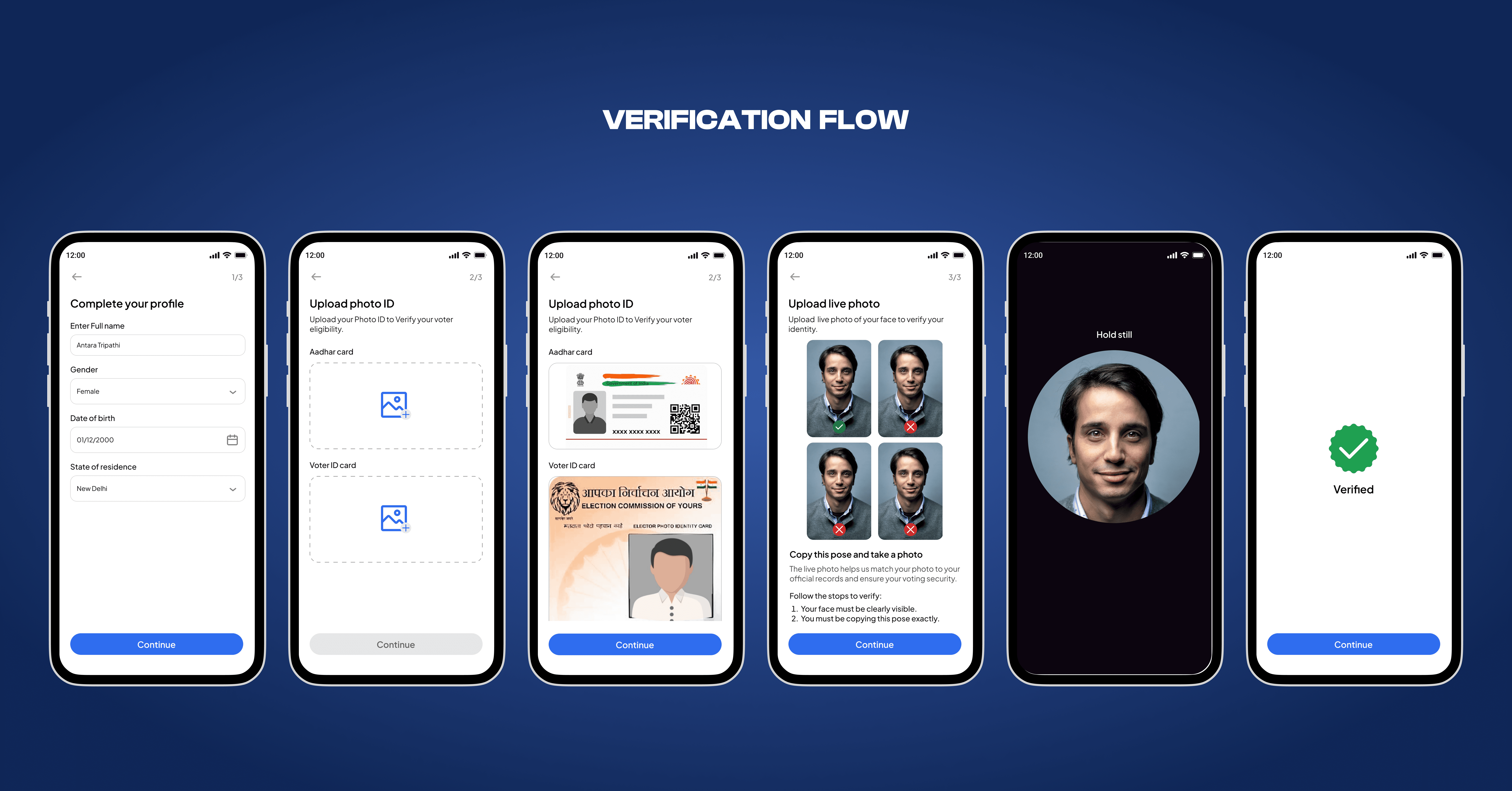
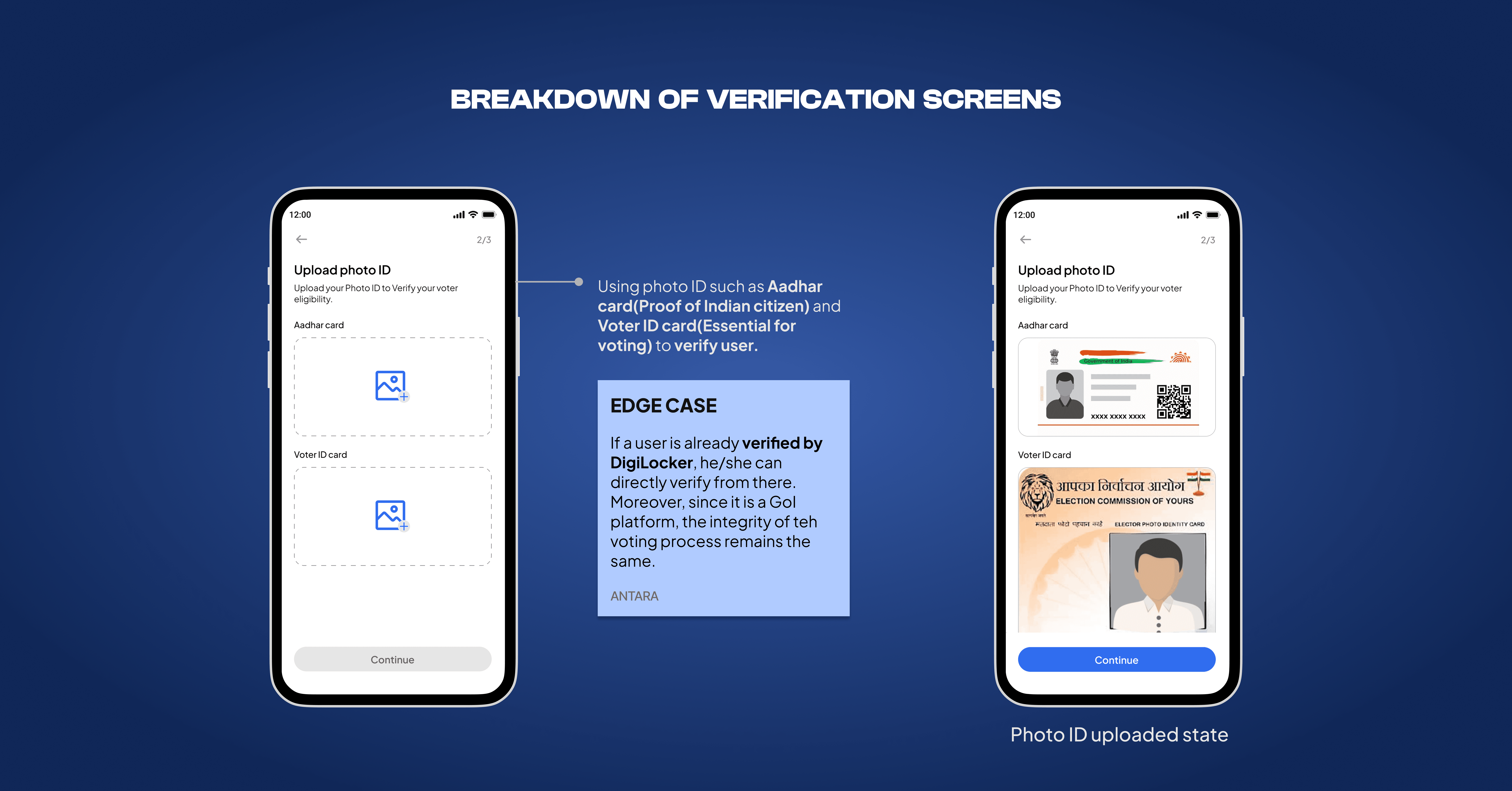
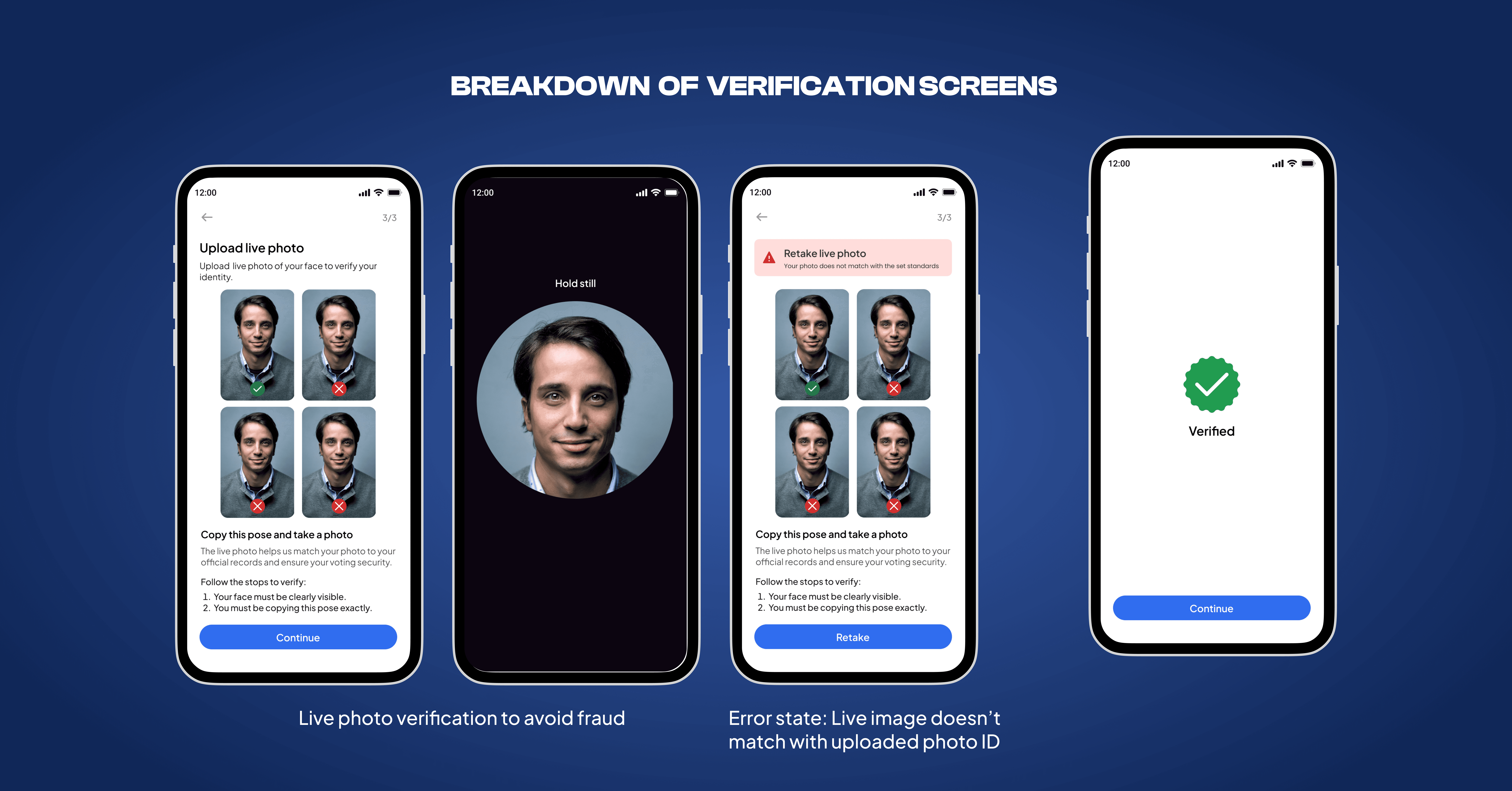
Verification Flow

Verification Flow

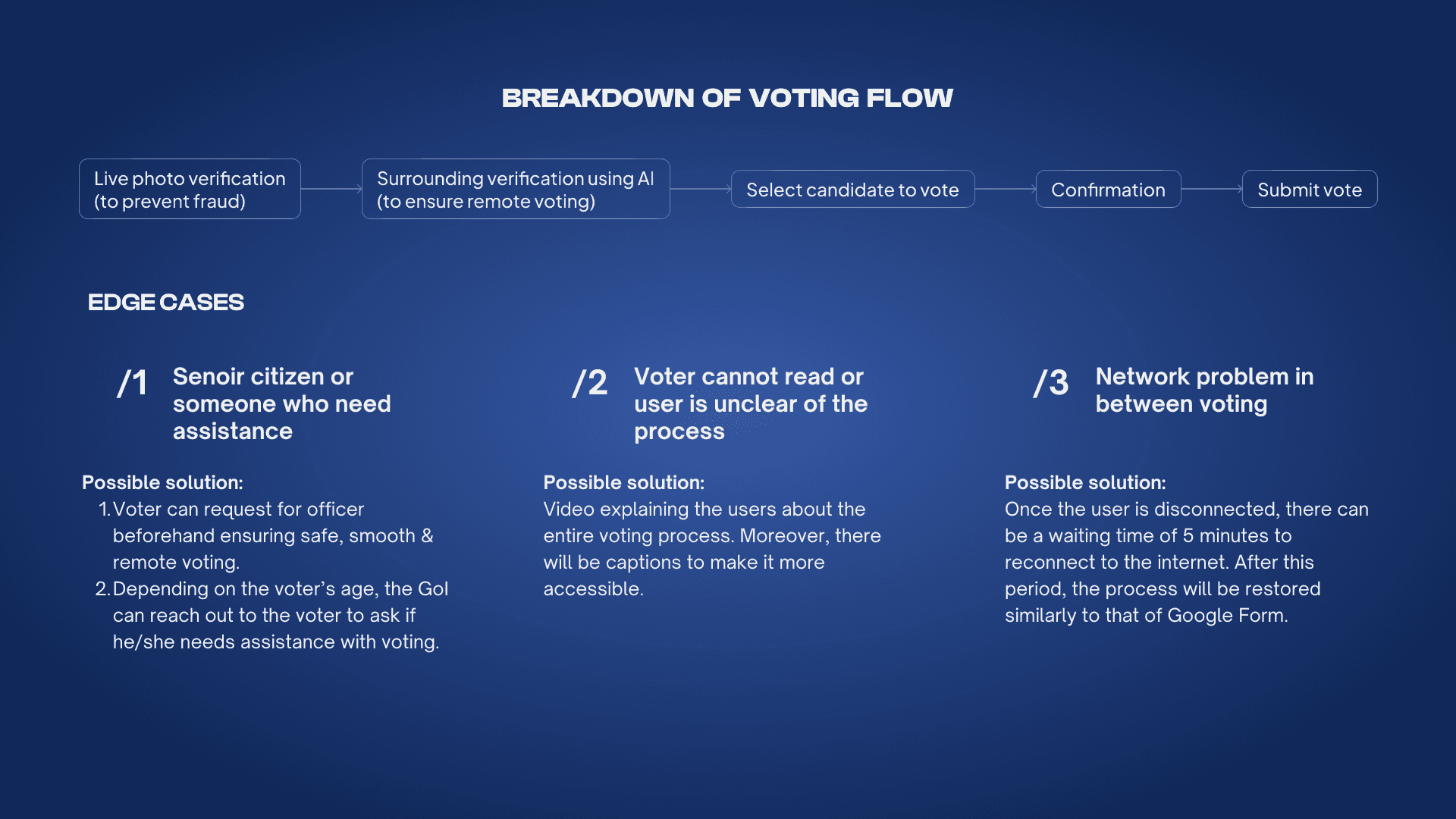
Edge CASES
Edge CASES
Edge CASES

Safeguarding the Voting Experience

Safeguarding the Voting Experience

Reflection
Reflection
Reflection

What I learned

What I learned

Designing for trust goes beyond UI patterns.

Designing for trust goes beyond UI patterns.

In high stakes systems, trust is built through clear communication, familiar verification methods, and visible safeguards not just visual design.

Edge cases deserve first class attention.

Edge cases deserve first class attention.

At national scale, designing for failures and accessibility is as important as the happy path. Resilient flows help maintain security and user confidence.

Create a free website with Framer, the website builder loved by startups, designers and agencies.